Dedicated rail desks in Jiaozhou, Zhengzhou and Xi'an
China–Europe and China–Central Asia corridors, FCL and LCL
Full station-to-station coverage between China and Russia
Rail sits between ocean and air on almost every measure — roughly half the transit time of sea freight at a fraction of the cost of air. For manufacturers shipping into Europe, Central Asia or Russia, that middle ground is often the right answer, and it has become the default for cargo that is too time-sensitive for a vessel but too heavy or too routine to justify a flight.
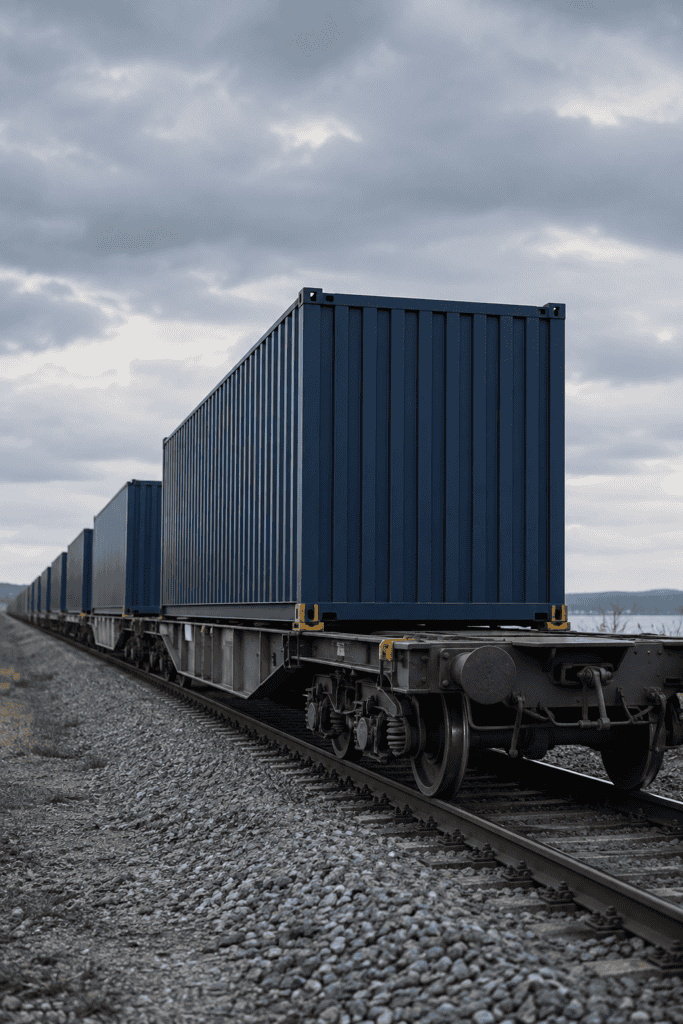
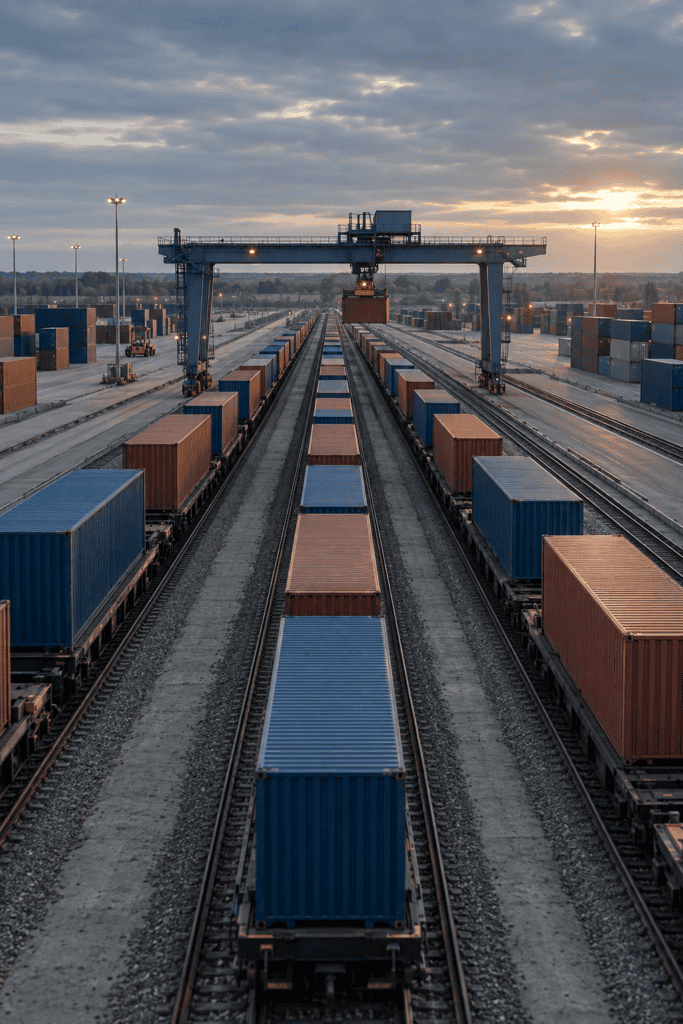
E-AndEx operates dedicated rail desks in Jiaozhou, Zhengzhou and Xi’an — three of China’s principal block-train origination points — with full station-to-station coverage between China and Russia. We book container slots on scheduled block trains, arrange the pre-carriage from your factory to the rail terminal, handle export declaration through our AEO-Advanced brokerages, and coordinate the border crossing and gauge change. Where rail alone does not reach, we combine it with sea or road legs into a single multimodal routing on one contract and one invoice.
Send us the origin factory, the destination city, the commodity and the volume. We come back with the realistic corridor options — which departure station, which border crossing, which block train service — along with the transit time and an all-in rate. Rail schedules are fixed rather than continuous, so the answer usually includes the next two or three departure dates rather than a single one.
After booking, we collect from your factory, move the container to the departure terminal, lodge the export declaration and hand over for loading. A named coordinator tracks the train through each border crossing and gauge change, and confirms arrival and unloading at the destination terminal. Because the corridors cross several customs territories, the documentation has to be right before departure — a discrepancy found at a border costs days, not hours, which is why our own declarants prepare it rather than a third party.
Rail waybill, commercial invoice, packing list and export declaration prepared by our own licensed declarants, with transit documentation checked against the requirements of every customs territory the train crosses.
Container slots booked on scheduled block train services from Jiaozhou, Zhengzhou and Xi'an, with pre-carriage, border handling and destination terminal collection arranged as one movement.
Departure, border crossing, gauge change and arrival milestones tracked in our own system, with electronic proof of delivery at each node and one consolidated document set on completion.
Rail looks simple on a schedule and complicates quickly in practice. Slots sell out weeks ahead, the corridor crosses several customs territories, the gauge changes at the border, and winter closures move departure dates. What matters is whether your forwarder has desks at the origination stations or is buying space through someone who does.
+86 532 8697 3601
2F, Building 23, Guanggu Software Park, 396 Emeishan Road, Huangdao District, Qingdao, China
Roughly 16 to 22 days station to station on the main corridors, depending on departure point, border crossing and destination. Add two to four days for pre-carriage and export clearance at origin, and two to five days for customs and final delivery at destination. That compares with 35 to 45 days by ocean on equivalent lanes. Border congestion and winter conditions move these figures, so ask us for current timings before you plan around them.
Yes, on both counts — that is the whole reason the corridors exist. Rail typically costs a fraction of air freight while cutting ocean transit roughly in half. It suits cargo that is too time-sensitive for a vessel but too heavy or too routine to justify a flight: automotive components, machinery, electronics, chemicals and consumer goods heading into Europe, Russia or Central Asia.
Yes. We consolidate LCL rail cargo from our warehouses, so a part-container shipment still gets a rail transit time rather than waiting for a vessel. Tell us the volume and weight and we will price both LCL rail and FCL so you can see where the crossover sits for your shipment.
China uses standard gauge and the former Soviet network uses broad gauge, so containers are transhipped onto different railcars at the border — most commonly at Alashankou, Khorgos, Erenhot or Manzhouli. We coordinate the transhipment and the customs formalities of each territory the train crosses. This is where most rail delays originate, and it is the reason documentation has to be correct before departure rather than fixed in transit.
Most dangerous goods classes are restricted or prohibited on the China–Europe corridors, and the permitted list varies by operator and by transit country. Temperature-sensitive cargo needs careful assessment because the corridors cross extreme winter conditions. Send us the commodity and HS code and we will confirm whether rail is viable before you plan around it.
Two to four weeks for standard lanes. Slots on the busiest corridors sell out further ahead than that, particularly before Chinese New Year and in the autumn peak. If your date is fixed, book early; if it is flexible, tell us the window and we will find the best departure within it.
Not sure whether rail beats ocean on your lane? Send us the route and we will price both.